लेख
A Guide To The Automated Warehouse Robots
As distribution centers and manufacturing facilities face increasing pressure to improve efficiency, automated warehouse robots have become a critical investment. Businesses seeking a competitive advantage are turning to robotics and automation to streamline operations, reduce labor-intensive work, and increase throughput.
Jordan Reed
लेखक
नोट
संदर्भ के लिए संक्षिप्त कार्ड साथ रखे गए हैं।
श्रेणी
विश्लेषण
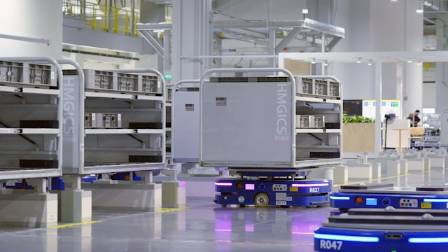
As distribution centers and manufacturing facilities face increasing pressure to improve efficiency, automated warehouse robots have become a critical investment. Businesses seeking a competitive advantage are turning to robotics and automation to streamline operations, reduce labor-intensive work, and increase throughput.
Today's warehouse automation systems are capable of far more than simply moving products from one location to another. Advanced robots can manage inventory, transport materials, assist with order fulfillment, perform inspections, and even handle maintenance tasks. Understanding the various categories of warehouse robots is essential for organizations planning new facilities or upgrading existing operations.
What Are Automated Warehouse Robots?
Warehouse automation robots are designed to improve productivity, accuracy, and workplace safety by taking over repetitive material-handling tasks.
These systems can transport inventory, assist with order picking, move pallets, and deliver products to designated locations throughout a facility. By handling routine operations, robots allow employees to focus on higher-value responsibilities that require human judgment and decision-making.
Modern robots are equipped with advanced sensors that help them detect obstacles, avoid collisions, and navigate complex warehouse environments safely. Unlike earlier generations of Automated Guided Vehicles (AGVs), today's systems can communicate with other equipment and operate with minimal human supervision.
One of the most significant advancements is intelligent navigation. Instead of relying solely on fixed tracks or physical guides, modern robots use onboard maps, sensors, and software algorithms to understand their surroundings and make real-time routing decisions.
Autonomous Mobile Robots (AMRs) can identify obstacles, avoid workers, adjust routes dynamically, and continue operating without disrupting workflow. This flexibility enables warehouses to maximize efficiency while maintaining safe working conditions.
The 10 Main Types of Warehouse Robots
Automated Guided Vehicles (AGVs)
AGVs are robotic transport vehicles that follow predetermined routes using technologies such as magnetic strips, lasers, or embedded guidance systems.
They are ideal for repetitive transportation tasks where travel paths remain consistent and predictable.
Autonomous Mobile Robots (AMRs)
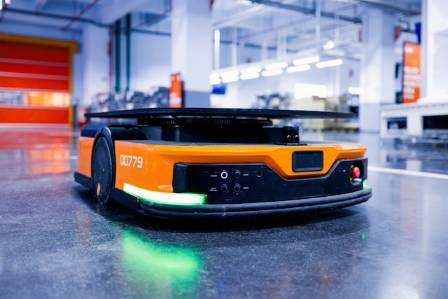
AMRs represent a more advanced form of mobile automation.
Unlike AGVs, they can move independently throughout a facility while continuously adapting to changing conditions. Their ability to calculate routes dynamically makes them highly effective for transporting inventory and supporting order fulfillment operations.
Automated Storage and Retrieval Systems (ASRS)
ASRS robots specialize in inventory storage and retrieval.
Operating within specially designed storage structures, these systems maximize space utilization and improve inventory management efficiency. They are commonly used for pallets and other large-volume items stored in high-density environments.
Picking Robots
Picking robots automate the process of selecting products for customer orders.
Using technologies such as cameras, vacuum systems, and robotic grippers, these machines can handle a wide variety of product types while improving picking speed and accuracy.
Palletizing Robots
Palletizing robots automate the stacking and arrangement of products onto pallets.
These systems can handle different product sizes and packaging formats while integrating seamlessly with conveyors and warehouse transportation systems.
Sortation Robots
Sortation robots automatically identify and direct products according to predetermined criteria such as destination, dimensions, or weight.
They play a vital role in distribution centers where large volumes of packages must be routed quickly and accurately.
Inspection Robots
Inspection robots support quality control initiatives by examining products for defects or inconsistencies.
Equipped with cameras, sensors, and analytical software, they help ensure products meet established standards before shipment.
Loading and Unloading Robots
These robots automate the transfer of goods into and out of trucks, containers, and transportation vehicles.
Different attachment systems allow them to handle a wide range of products while reducing manual labor requirements.
Cleaning Robots
Warehouse cleaning robots maintain facility cleanliness through automated sweeping, scrubbing, vacuuming, and floor maintenance functions.
Their consistent performance helps maintain safer and more professional work environments.
Maintenance Robots
Maintenance robots are designed to perform tasks such as painting, welding, inspections, and equipment repairs.
Many can operate autonomously and integrate with facility management systems to support preventative maintenance programs.
These robotic solutions help organizations improve efficiency, increase accuracy, enhance safety, and reduce labor expenses. However, successful implementation requires careful planning, investment, and integration with existing workflows.
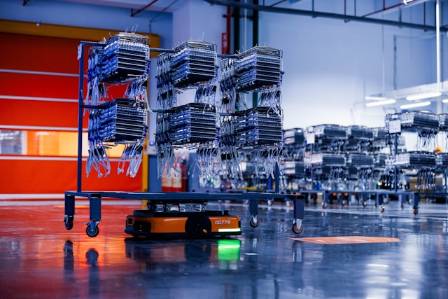
Advanced Pallet-Handling Robots
Among the many warehouse automation technologies available today, pallet-handling robots deliver some of the most immediate operational benefits.
Autonomous Forklifts
Automated forklifts have become one of the most important tools in modern warehouse automation.
These driverless vehicles transport pallets independently and can interact directly with conveyors, wrapping stations, storage racks, and other warehouse equipment.
Because they constantly monitor their surroundings, autonomous forklifts reduce many of the risks associated with traditional forklift operation. They can assess load weight, determine safe operating speeds, and maintain awareness of nearby objects from all directions.
Integration with Warehouse Management Systems (WMS) allows automated task assignment, while onboard barcode scanners ensure the correct pallet is moved to the proper destination.
Autonomous Tugger Robots
When large quantities of materials need to be moved simultaneously, autonomous tugger robots offer an effective solution.
Functioning like locomotives, these robots pull multiple carts in a train-like configuration throughout the facility.
By reducing traffic congestion and improving route efficiency, autonomous tuggers can significantly lower labor requirements while increasing productivity. Their intelligent routing systems continuously optimize delivery sequences based on current operational conditions.
Collaborative Pallet Jack Robots
Collaborative pallet jacks, often called co-bots, are designed for flexible movement in confined spaces.
They excel at replenishment activities and support smaller workflows such as transporting empty pallets, consolidating containers, collecting waste materials, and moving products between picking and packing stations.
Advanced sensing technology provides full environmental awareness, improving safety while reducing the physical demands placed on employees.
Driverless Pallet Trucks
Driverless pallet trucks are engineered for transporting heavy loads over long warehouse distances.
Some models can move double-stacked pallets weighing as much as 8,000 pounds while maintaining precise control and operational efficiency.
These systems are particularly valuable for cross-docking operations, sortation activities, and pallet put-away processes. By eliminating manual operation, they help reduce errors while accelerating material flow.
Advantages of Warehouse Automation Robots
As supply chains become increasingly demanding, warehouse robots offer a wide range of operational benefits that extend beyond simple labor reduction.
Sustainability Benefits
Automation contributes to more environmentally responsible warehouse operations.
Robots optimize travel routes, reduce unnecessary energy consumption, and minimize waste generated through operational inefficiencies. These improvements help organizations lower their carbon footprint while supporting sustainability initiatives.
Improved Operational Efficiency
One of the greatest strengths of warehouse automation is its ability to streamline workflows.
Through direct integration with inventory and warehouse management systems, robots ensure products are stored, retrieved, and transported accurately and quickly.
The result is faster order fulfillment, greater throughput, and improved customer satisfaction.
Long-Term Cost Reduction
Although automation requires an upfront investment, the long-term financial advantages can be substantial.
Organizations often experience lower labor expenses, fewer product damages, reduced operational waste, and increased scalability without proportional workforce growth.
Higher Productivity and Better Safety
Robots can operate continuously without fatigue, allowing warehouses to maintain high productivity levels around the clock.
At the same time, automation reduces employee exposure to physically demanding tasks and hazardous environments. Advanced sensors and obstacle-detection systems further decrease the likelihood of workplace accidents.
Solving Labor Shortages Through Automation
Many industries continue to face workforce shortages that make hiring and retaining employees increasingly difficult.
Warehouse robots provide a practical solution by taking over repetitive, physically demanding work that can be challenging to staff consistently.
By automating critical workflows, companies can maintain operational performance despite labor market challenges. Existing employees can focus on more strategic activities while robots handle routine transportation and material movement tasks.
Automation also creates long-term resilience by reducing dependence on fluctuating labor availability and ensuring business continuity.
Why Warehouse Automation Makes Business Sense
In today's logistics environment, speed and efficiency directly influence profitability.
The continued growth of e-commerce and increasing customer expectations for rapid delivery are pushing warehouses toward greater levels of automation.
Technologies such as autonomous forklifts, tugger robots, collaborative pallet jacks, and driverless pallet trucks provide significant improvements in speed, consistency, and operational reliability.
Beyond productivity gains, these systems contribute to safer workplaces, more sustainable operations, and improved scalability for future growth.
While transitioning to warehouse automation may initially seem complex, organizations that establish clear objectives and work with experienced technology partners often achieve substantial long-term returns.
By embracing advanced robotics today, warehouses can build smarter, safer, and more efficient operations that remain competitive in an increasingly demanding global marketplace.
संबंधित
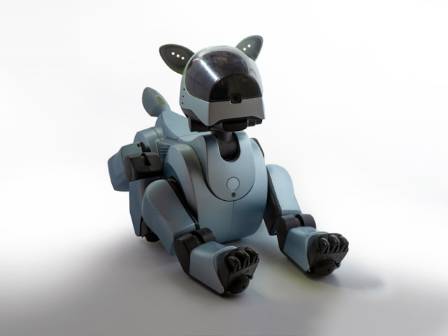
कृत्रिम साथियों का विकास: रोबोटिक पालतू जानवरों का इतिहास और आधुनिक DIY समाधान
मानव सभ्यता के आरंभिक काल से ही मानव और पशुओं के बीच गहरा संबंध रहा है। साक्ष्य बताते हैं कि कुत्तों को लगभग 30,000 वर्ष पहले पालतू बनाया गया था, जो विभिन्न प्रजातियों के बीच संबंधों के लंबे इतिहास की शुरुआत का प्रतीक है। हालांकि, अपने लिए पालतू जानवर बनाने की अवधारणा अपेक्षाकृत आधुनिक है।
स्वचालन का विकास: 300 ईसा पूर्व से 1969 तक रोबोटिक्स का इतिहास
"रोबोट" शब्द अक्सर आधुनिक कंप्यूटिंग से जुड़ा होता है, लेकिन इसकी यांत्रिक नींव हज़ारों साल पुरानी है। समकालीन परिभाषाओं में रोबोट को एक ऐसी मशीन के रूप में वर्णित किया गया है जो जटिल, स्वचालित क्रियाओं को निष्पादित करने में सक्षम है—विशेष रूप से वे क्रियाएँ जो कंप्यूटर द्वारा नियंत्रित होती हैं—लेकिन ऐसे उपकरणों का इतिहास डिजिटल युग से भी पुराना है। यह शब्द स्वयं 1920 में कारेल Čapek के नाटक RUR (Rossum's Universal Robots) में लोकप्रिय हुआ, जिसने पुराने शब्द "ऑटोमेटा" का स्थान ले लिया। दिलचस्प बात यह है कि 1970 के दशक तक आम बोलचाल में "रोबोट" शब्द "ऑटोमेटन" से पूरी तरह से अलग नहीं हुआ था।

Best Sports Cars in 2026
Sports cars represent a dream for many drivers, delivering excitement and performance that everyday vehicles simply can’t match. Although interest in this segment has cooled slightly, there are still plenty of excellent options available—some even at relatively affordable prices. Below is a refreshed guide to the top sports cars you can buy in 2025, along with helpful insights to guide your decision.

The World of Campanula: Biology, Taxonomy, and Horticulture
Campanula, commonly known as bellflower, is the type genus of the Campanulaceae family. The name “Campanula” originates from Latin, meaning “little bell,” which refers to the characteristic bell-shaped flowers of these plants.

प्रोफेशनल की तरह आउटफिट्स को मिक्स एंड मैच कैसे करें
मिक्स एंड मैच की कला में महारत हासिल करने से आपकी अलमारी तीन गुना बड़ी लगने लगेगी। इसका रहस्य अलमारी को कपड़ों से भरना नहीं है; बल्कि ऐसे बहुमुखी परिधानों में निवेश करना है जो एक साथ सहजता से मेल खाते हों। सही बुनियादी कपड़ों के साथ, आप हर दिन स्टाइलिश लुक बना सकते हैं, बिना इस बात की चिंता किए कि सुबह-सुबह कौन से कपड़े एक साथ अच्छे लगेंगे।

The First Motorcycle Helmet With Integrated Augmented Reality Has Arrived
Riding a motorcycle safely requires complete concentration on the road ahead. Helmet manufacturers are now bringing futuristic display technology directly onto rider visors. Japanese helmet producer Shoei partnered with French technology firm EyeLights to create the GT-Air 3 Smart. This advanced piece of protective headgear stands as the world first fully integrated augmented reality helmet. A built-in heads-up display projects vital driving information directly into the field of view of the rider. Drivers no longer need to glance down at secondary screens or handlebar mounts to check their current speed or navigation prompts.