The waterbuck (Kobus ellipsiprymnus) stands as one of Africa’s most iconic and recognizable antelopes, a symbol of the continent’s untamed wetland landscapes. With its imposing size, shaggy grayish-brown coat, distinctive white markings, and curled horns (exclusive to males), this species has evolved a suite of unique adaptations to thrive in moisture-rich habitats. Never straying far from permanent water sources, the waterbuck embodies the harmony between wildlife and Africa’s rivers, floodplains, and reed beds. Beyond its striking appearance, the waterbuck exhibits complex social dynamics, fascinating breeding behaviors, and survival strategies that make it a subject of intrigue for wildlife enthusiasts and ecologists alike. From its waterproof coat to its ritualized male contests, every aspect of the waterbuck’s biology is finely tuned to its aquatic-associated lifestyle.
Taxonomy and Distinctive Physical Traits
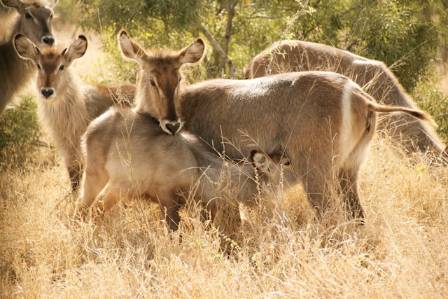
Classified under the genus Kobus in the Bovidae family, the waterbuck is divided into two main subspecies: the common waterbuck (Kobus ellipsiprymnus ellipsiprymnus) and the Defassa waterbuck (Kobus ellipsiprymnus defassa), distinguished by subtle differences in coat color and markings. Both subspecies share core physical characteristics that define the species: a stocky, muscular build with short, sturdy legs designed for navigating muddy terrain and dense vegetation. Adult males (bulls) are significantly larger than females (cows), with a shoulder height ranging from 1.3 to 1.7 meters and a weight of up to 270 kilograms, while females reach around 1.1 meters at the shoulder and weigh approximately 180 kilograms. The waterbuck’s coat is thick, rough, and shaggy, with a grayish-brown hue that provides camouflage in reed beds and woodland edges. A defining feature is the white markings: a prominent circular ring on the rump (often called a “target ring”), a collar-like band around the throat, and occasional white patches on the face and chest. Only males grow horns, which are long, curved, and ridged, reaching lengths of up to 90 centimeters; they curl backward and slightly inward, serving both as weapons in contests and symbols of dominance. Additionally, waterbucks possess a unique glandular patch on the underside of the neck that secretes an oily, waterproof substance—an adaptation that protects their coat from moisture and gives mature bulls a strong, musky odor.
Habitat: Bound to Water and Fertile Land
True to its name, the waterbuck is inseparable from water, with all populations residing within two kilometers of permanent water sources such as rivers, lakes, swamps, and floodplains. This reliance on water stems from both physiological needs (regular drinking) and survival strategies (escaping predators). The species favors a mix of habitats that combine water access with abundant forage: floodplains covered in tall grass, dense reed beds, open grasslands, and woodlands adjacent to wetlands. In some regions, they also venture onto stony mountain slopes, provided water and suitable vegetation are available. Waterbucks are highly adaptable to different moisture levels, from seasonal floodplains that dry out partially in the dry season to permanent swamps, but they avoid arid areas or dense forests where forage is scarce. Their habitat choice is also influenced by the need for cover—thick vegetation and water bodies serve as refuges from predators, compensating for the waterbuck’s relatively slow speed and limited endurance. Across Africa, waterbucks are distributed from the Sahel region in the north to South Africa, occupying countries such as Kenya, Tanzania, Botswana, Zambia, and South Africa, where wetland ecosystems support their dietary and behavioral needs.
Diet: Grazers of Tall Grass and Occasional Browsers
Waterbucks are primarily grazers, with a strong preference for tall, coarse grasses that grow abundantly in floodplains and river edges—vegetation that many other grazers avoid. This dietary specialization allows them to exploit a niche with less competition, as their digestive systems are adapted to break down tough, fibrous plant material. While grasses make up the bulk of their diet (up to 90%), waterbucks occasionally browse on leaves, shoots, shrubs, and even tree bark, especially during the dry season when grass quality declines. They are selective feeders, choosing the most nutritious parts of plants, such as young shoots and tender leaves, to maximize energy intake. Unlike some arid-adapted antelopes, waterbucks drink water multiple times a day, a habit that reinforces their dependence on permanent water sources. Their foraging behavior is crepuscular, meaning they are most active during dawn and dusk, avoiding the midday heat to conserve energy. Herds often graze in loose groups, moving slowly through grasslands and wetland edges, with individuals spreading out to feed but remaining within visual contact to alert each other of danger.
Social Structure: Herds, Territories, and Bachelor Groups
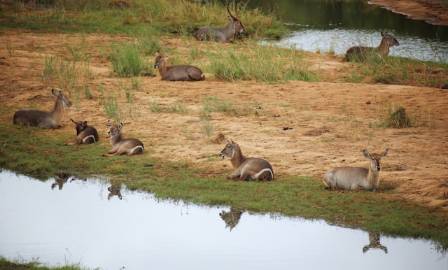
Waterbucks exhibit a structured social system centered on gender and reproductive status. Females and non-breeding males form mixed herds of 6 to 12 individuals, though larger aggregations (up to 30) may occur in areas with abundant food and water. These herds are fluid, with members joining or leaving based on forage availability and predator activity. Within female herds, social bonds are relatively loose, but mothers and calves maintain close relationships until the calf is weaned. In contrast, breeding males (territorial bulls) are solitary defenders of prime habitats—areas with rich grass, access to water, and high female traffic. A territorial bull will aggressively exclude other breeding males from his domain, using scent marking (via urine and glandular secretions) and visual displays to advertise his presence. Bachelor groups consist of young, non-territorial males, typically between 1 and 4 years old, who travel together to avoid conflict with dominant bulls. These groups provide safety in numbers and allow young males to practice social behaviors and develop strength for future territorial contests. Interestingly, territorial bulls may tolerate the presence of a subordinate younger male who assists in defending the territory against intruders, a form of “alliance” that benefits both parties.
Breeding Behavior: Courtship, Mating, and Maternal Care
Waterbuck breeding occurs year-round, though peak activity often coincides with the rainy season when food is abundant. Territorial bulls continuously monitor females in their territory to detect signs of estrus (heat), using their sense of smell to sniff urine and genitals. When a receptive female is identified, the bull initiates courtship: he rubs his face and the base of his horns against her back, taps her hind legs with his foreleg, and follows her closely, emitting low grunts. If the female is receptive, she stands still with her tail raised to one side, signaling readiness for mating. Mating may occur up to 10 times in a single session to ensure fertilization. After a gestation period of approximately 8 to 9 months, the female leaves her herd to give birth in a secluded spot with thick vegetation. The calf is born with a reddish-brown coat and faint white spots, which provide camouflage. For the first month of life, the calf remains hidden in dense cover, lying motionless while the mother visits 2 to 3 times a day to nurse. After each nursing session, the calf moves to a new hiding spot to avoid attracting predators—a behavior known as “hiding strategy.” Calves are weaned at 6 to 8 months of age, at which point they join the female herd permanently. Female waterbucks reach sexual maturity at 1.5 to 2 years, while males mature later, at 3 to 4 years, but may not establish territories until they are 5 to 6 years old.
Establishing Dominance: Male Contests and Displays
Dominance among male waterbucks is determined through a combination of visual displays, ritualized behaviors, and occasional violent fights. Territorial bulls advertise their status by standing tall with their heads held high, showcasing their white throat collar and rump ring—visual signals that communicate size and dominance. To emphasize their physical presence, a bull may stand broadside to an intruder, highlighting his muscular build and thick neck. If a display is insufficient to deter a rival, the bull will lower his horns and shake his head vigorously, a more aggressive signal that precedes conflict. Serious fights involve locking horns and pushing against each other with immense force, as bulls attempt to gore their opponent’s flanks or legs. These contests can be fatal, with deaths resulting from deep horn wounds or exhaustion. Subordinate males, whether in bachelor groups or passing through a territory, avoid conflict by adopting submissive postures: holding their heads low, ears flattened, and avoiding eye contact with dominant bulls. Within bachelor groups, a dominance hierarchy is established through non-violent pushing contests, where older, larger males typically rank higher. This hierarchy helps reduce aggression and maintains order within the group.
Predators and Defense Mechanisms
Despite their large size, waterbucks face threats from several apex predators in Africa, including lions, leopards, hyenas, and African wild dogs. Crocodiles also pose a risk when waterbucks enter rivers to escape terrestrial predators. Waterbucks lack speed and endurance compared to smaller antelopes like impalas, so they rely on three key defense strategies: cover, water, and group vigilance. When alarmed, a waterbuck will flee into dense vegetation or directly into water, where it is a strong swimmer—many predators avoid pursuing prey into deep water. The species’ distinctive white rump ring plays a crucial role in escape: as the herd flees through thick bush, the white marking acts as a “follow me” signal, helping group members stay together and avoid becoming separated. Additionally, the waterbuck’s shaggy coat and glandular secretions have led to a widespread belief that older individuals’ meat has an unpleasant odor, deterring predators. However, scientific data does not support this claim—predators regularly hunt waterbucks, and the odor is more likely a social or territorial signal rather than a deterrent. Herd members also use vocalizations (snorts, grunts) and body language (tail flicking, ear positioning) to alert each other of danger, ensuring that the group remains vigilant.
Unique Adaptations: Surviving in Wet Environments
The waterbuck’s success in wetland habitats is due to a range of specialized adaptations, most notably its waterproof coat. The thick, shaggy fur is coated with an oily substance secreted by glands on the neck, which repels water and prevents the skin from becoming waterlogged—critical for an animal that frequently enters rivers and navigates muddy terrain. This adaptation also helps regulate body temperature, keeping the waterbuck warm in cool, damp environments. Another key adaptation is the species’ dependence on water, which has shaped its behavior: regular drinking ensures hydration in hot climates, while water bodies provide a reliable escape from predators. The white rump ring and throat collar are not just decorative—they serve as visual communication tools, aiding in group cohesion and dominance displays. Even the waterbuck’s digestive system is adapted to its diet of tough, fibrous grasses, with a multi-chambered stomach that allows for efficient fermentation and nutrient extraction. Additionally, the calf’s hiding strategy is a behavioral adaptation that reduces predation risk during the vulnerable early months of life, ensuring higher survival rates.
Fun Facts About Waterbucks
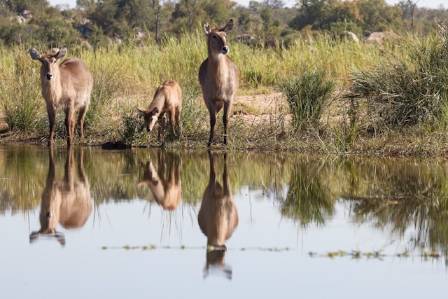
Beyond their ecological adaptations, waterbucks have several intriguing traits that make them stand out. For instance, the white rump ring is so distinctive that it’s often used by researchers to identify individual animals in the wild. Mature bulls emit a strong, musky odor from their neck glands, which can be detected from a distance and may help females assess a male’s health and dominance. Unlike many antelope species, waterbucks are not particularly fast runners—their top speed is around 50 kilometers per hour—but their strength and agility in water and dense vegetation more than compensate. Calves are born with their eyes open and can stand within minutes of birth, though they remain hidden for weeks to avoid predators. Another interesting fact is that waterbucks rarely venture more than two kilometers from water, making them easy to spot in wetland reserves and national parks across Africa. Finally, while they are primarily grazers, waterbucks have been observed browsing on acacia leaves and even eating fruit, showcasing their occasional flexibility in diet.