लेख
25 Intriguing Facts About Foxes
Foxes inhabit every continent except Antarctica, thriving in cities, towns, and rural areas alike. Even though they’re all around us, there’s still a sense of mystery surrounding these elusive creatures. Let’s uncover more about this fascinating animal and its unique traits, behaviors, and history.
Michael Russell
लेखक
नोट
संदर्भ के लिए संक्षिप्त कार्ड साथ रखे गए हैं।
श्रेणी
विश्लेषण
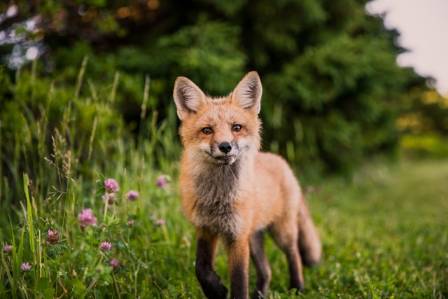
Foxes inhabit every continent except Antarctica, thriving in cities, towns, and rural areas alike. Even though they’re all around us, there’s still a sense of mystery surrounding these elusive creatures. Let’s uncover more about this fascinating animal and its unique traits, behaviors, and history.
1. Foxes are related to dogs
Foxes belong to the Canidae family, which means they share ancestry with wolves, jackals, and dogs. They are medium-sized animals, weighing anywhere from 2 to 24 pounds, and are easily recognizable by their pointed faces, slender bodies, and bushy tails. This family connection explains some of their canine-like traits, though they also have distinct features that set them apart from their more well-known relatives.
2. Foxes are solitary
Unlike many of their Canidae relatives, foxes are not pack animals. The only time they live in groups is when raising their young, forming small family units known as a “leash of foxes” or a “skulk of foxes.” These families reside in underground burrows for protection. Outside of the breeding and rearing season, foxes prefer to hunt and sleep alone, navigating their territories independently.
3. Foxes have a lot in common with cats
Foxes share several surprising similarities with cats. Like felines, they are most active after sunset, making them primarily nocturnal. Their vertically shaped pupils allow them to see clearly in low light, and they hunt by quietly stalking their prey before pouncing—just like a cat. Foxes also have sensitive, cat-like whiskers that help them navigate tight spaces, and their tongues are covered in small spines. They walk on their toes, which gives them an elegant, feline-style gait. The gray fox even has semi-retractable claws, a trait unique among members of the dog family, allowing it to climb trees. In fact, gray foxes have been observed sleeping in tree branches, a behavior almost identical to that of cats.
4. There are 12 true foxes—and many relatives
While there are 37 different animals commonly referred to as “foxes,” only 12 are classified as “true foxes,” meaning they belong to the genus Vulpes. Examples of true foxes include the red fox, Arctic fox, fennec fox, and kit fox. These true foxes share key physical traits: flattened skulls, triangular snouts, and fluffy tails. However, identifying them in the wild can be tricky. A study found that even nature enthusiasts who can recognize most North American mammals often mix up foxes with other canids, such as coyotes, due to their similar overall body shape.
5. The red fox is the most common fox
Geographically, the red fox has the widest range of any animal in the order Carnivora (which includes 280 species). Its natural habitat is a mix of scrubland and woodland, but its flexible diet allows it to adapt to a wide variety of environments. As a result, the red fox’s range covers the entire Northern Hemisphere—from the Arctic Circle down to North Africa, across Central America, and into the Asiatic steppes. It has even established populations in Australia, where it is considered an invasive species due to its impact on native wildlife.
6. Foxes use Earth’s magnetic field
Foxes have a remarkable ability to harness Earth’s magnetic field to hunt, much like a guided missile. While other animals such as birds, sharks, and turtles have this “magnetic sense,” foxes are the first known species to use it specifically to catch prey. According to New Scientist, foxes can perceive the planet’s magnetic field as a “ring of shadow” in their eyes; this shadow darkens as they move toward magnetic north. When this shadow aligns with the sound of nearby prey, the fox knows it’s the perfect moment to pounce.
7. Foxes are good parents
Fox pups are born blind and do not open their eyes until nine days after birth. During this vulnerable period, the pups stay in the den with the vixen (female fox) while the dog (male fox) hunts and brings back food. The pups live with their parents until they are seven months old, learning essential survival skills like hunting and navigating their territory. Vixens are incredibly protective of their young: In one case in England, a fox pup was trapped in a wire snare for two weeks but survived because its mother brought it food every single day.
8. Fox pup play can get violent
Foxes are known to play with each other and even with other animals, but play serves a more serious purpose than just fun—it helps establish social hierarchy, and this process starts very early in life. Animal behaviorist Sandra Alvarez-Betancourt analyzed thousands of hours of infrared camera footage of fox pups in their dens. She discovered that the competition for dominance begins as soon as the pups can walk. This play can be surprisingly brutal and even deadly; studies show that one in five fox pups does not survive past the den stage due to injuries from these aggressive interactions.
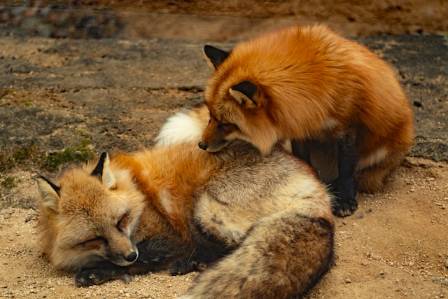
9. The smallest fox weighs less than three pounds
The fennec fox—with its cream-colored fur—is roughly the size of a domestic kitten and lives in the deserts of North Africa. To survive in the harsh desert environment, it has several key adaptations: Its long ears (which can be up to 6 inches long) help radiate body heat, keeping the fox cool, and also allow it to hear prey moving underground. Additionally, its paws are covered in thick fur, acting like natural snowshoes and enabling it to walk on hot sand without burning its feet. During the day, fennec foxes sleep in underground burrows to avoid the scorching desert sun.
10. Foxes have long had a relationship with humans
Even though foxes are wild animals, their connection to humans dates back thousands of years. In 2011, researchers excavated a 16,500-year-old cemetery in Jordan and found the remains of a human buried alongside a fox. This is 4,000 years earlier than the first known burial of a human with a domesticated dog, suggesting that foxes may have been among the first animals to form a close association with humans.
11. The island fox is an evolutionary puzzle
The island fox is a small species that lives on the Channel Islands off the coast of Southern California. Scientists believe it descended from gray foxes brought to the islands by humans who settled there 13,000 years ago. Recent genetic studies have revealed a surprising fact: All island foxes are nearly genetically identical. According to The New York Times, one group of island foxes “holds the record for the least genetic variation in a sexually reproducing species.” Normally, low genetic diversity leads to higher rates of disease and deformity, but the island fox has proven remarkably resilient. At one point, the species was critically endangered, but thanks to conservation efforts, its status has been upgraded to “near threatened.”
12. Fox fur comes in many colors
Foxes exhibit a wide range of fur colors and patterns. For example, the Arctic fox’s fur changes color with the seasons, alternating between two main “morphs” (color variations). The white morph is brown or gray in summer and turns pure white when snow covers the ground, providing camouflage. The blue morph, on the other hand, remains dark gray or brown year-round.
Red foxes also come in multiple color variations, including silver, black, orange, or a mix of these hues. While some color differences occur naturally, humans have also bred foxes for their fur, creating specific patterns. These include the marble fox (white with gray or black streaks), the cross fox (red with black patches), and the pink champagne fox (peachy-white fur with a pink nose).
13. In one experiment, domesticated foxes became more like dogs
In 1959, a Soviet geneticist named Dmitry Belyaev conducted a groundbreaking experiment to study domestication. He selectively bred silver foxes, choosing only those individuals that showed the least aggression toward humans. Within just 10 generations, the foxes began to exhibit dog-like behaviors: They sought out human interaction, licked people’s hands, barked, and wagged their tails. Physical changes also appeared, such as white spots on their coats and floppy ears. This experiment suggested there are genetic links between an animal’s appearance and its behavior during domestication. While some scientists have challenged the experiment’s methodology, it still provided valuable insights into how selective breeding shapes domesticated species.
14. Some people keep foxes as pets
While wild foxes should never be kept as pets, domesticated foxes do exist, thanks in part to Belyaev’s experiment. Unlike a “tame” fox (which has learned to tolerate humans but retains wild instincts), a domesticated fox is bred from birth to be docile. Laws regarding pet foxes and access to them vary by location. Reports suggest that domesticated foxes are curious and gentle, but they are also high-energy and tend to explore everything, some owners compare living with a pet fox to living with a 2-year-old child. It’s important to note that, unlike the foxes from Belyaev’s Siberian facility, foxes bred in the United States are not truly domesticated or tame.
15. Switzerland tricked foxes into vaccinating themselves
In the 1960s, Switzerland faced a rabies epidemic among foxes. Since rabies can be transmitted to humans via animal bites and is often fatal, this posed a major public health crisis. The Swiss government wanted to vaccinate the fox population, but administering shots by hand was both difficult and expensive. Instead, officials came up with a creative solution: They dropped vaccinated chicken heads across the countryside for foxes to eat. In total, 52,000 chicken heads were distributed. As The Atlantic reported, “From 1979 to 1984, chicken heads would rain down on the countryside.” The plan worked: Rabies was eliminated from the fox population, proving both the effectiveness of the vaccine and foxes’ love of chicken.
16. Arctic foxes don’t shiver until -94°F (-70°C)
The Arctic fox, which lives in the northernmost regions of the hemisphere, is one of the most cold-tolerant animals on Earth. It does not start shivering until temperatures drop to -94°F (-70°C). Its thick, dense fur traps body heat, and it often wraps its bushy tail around its body like a blanket to stay warm. In the autumn, Arctic foxes build up a layer of fat, sometimes increasing their body weight by 50%. This fat provides extra insulation and helps them survive the coldest winter days when food is scarce.
17. Climate change is hurting Arctic foxes
Arctic fox populations are declining, and scientists believe the red fox is a major cause. As global temperatures rise, red foxes are expanding their range northward into the Arctic tundra, where they compete with Arctic foxes for prey. Red foxes are more skilled hunters, and to make matters worse, they also prey on Arctic foxes. This double threat—competition for food and predation—does not bode well for the future of Arctic foxes, whose survival is tightly linked to the cold, ice-covered habitats that are shrinking due to climate change.
18. Fox hunts continue to be controversial
Fox hunting has been a popular activity in Britain since the 16th century. In the 19th century, the upper classes turned it into a formal sport, where a pack of hounds and riders on horseback chase a fox until it is killed. Today, debates over potential bans on fox hunting remain a divisive issue in the UK. Many people view foxes as pests that damage livestock or crops, while others argue that fox hunting is cruel and unnecessary. Currently, fox hunting is legal in the UK only under certain conditions—for example, using two dogs to hunt a fox if it is damaging property.
19. Foxes are fast
Foxes are surprisingly speedy: Some species can run up to 42 mph, giving new meaning to the phrase “quick like a fox.” They are also highly agile—able to jump 3 feet in the air, climb fences, and scale roofs. Additionally, foxes have impressive endurance: One Arctic fox was tracked walking 2,700 miles from Norway to Canada in just three months, averaging more than 30 miles per day. This remarkable stamina helps them cover large distances in search of food and suitable habitats.
20. Foxes appear throughout folklore
Foxes have played a prominent role in the folklore of cultures around the world. Examples include the nine-tailed fox from various Asian traditions, the Reynard the Fox tales from medieval Europe (which depict a clever, trickster fox), the sly trickster fox in Native American stories, and Aesop’s fable “The Fox and the Crow.” Finnish folklore even claims that the northern lights are created by a fox running across the snow, with its tail sweeping up sparks into the sky. This legend is the origin of the term “fox fires”—though it’s worth noting that “Firefox,” as in the Mozilla web browser, actually refers to the red panda, not a fox.
21. Foxes are associated with being sneaky
In Western culture, foxes have long been described as wily, clever, or cunning. Unlike some animal traits, this reputation is not a compliment: Foxes are often portrayed as deceptive tricksters who act only in their own self-interest. This perception likely stems from several of their natural behaviors: their adaptability to human environments, their nocturnal habits (which make them seem secretive), and their tenacious ability to break into chicken coops or evade hunting dogs. Even today, foxes regularly outsmart humans: In one viral video, an Arctic fox was filmed pretending to be dead to escape Siberian fur trappers, proving just how “sly” these animals can be.
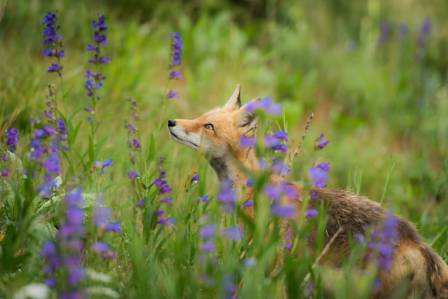
22. In London, foxes are domesticating themselves
A study of urban foxes in London revealed a surprising trend: These city-dwelling foxes are starting to look more like domesticated dogs. Compared to their rural counterparts, London foxes have shorter snouts and smaller brains. The reason for these changes is still unclear, but the most unusual aspect is that the foxes are driving this transformation themselves. As evolutionary biologist Kevin Parsons explained to the BBC, “This is the result of foxes that have chosen to live near people developing traits that make them look more like domesticated animals.” This self-directed domestication is a rare example of animals adapting to human environments in ways that mimic the process of domestication.
23. Bat-eared foxes listen for insects
The bat-eared fox gets its name not just from its enormous 5-inch ears, but also from how it uses them: Like bats, it relies on its hearing to find insects. Each night, the bat-eared fox walks across the African savannah, listening intently for the sound of prey digging underground. While it eats a variety of insects and lizards, termites make up the majority of its diet—up to 80% in some cases. The bat-eared fox even often makes its home in abandoned termite mounds, which it typically clears of termites before moving in.
24. Charles Darwin discovered a fox species
During his famous voyage on the HMS Beagle, Charles Darwin discovered a small fox species on Chiloé Island off the coast of Chile. According to Darwin’s writings, the fox was sitting on a rocky cliff, watching the ship anchored offshore with curiosity. He noted, “He was so intently focused on watching the officers at work that I was able to walk up quietly behind him and knock him on the head with my geological hammer.”
Today, this small gray fox (known as Darwin’s fox) is critically endangered. It now lives in only two locations: on Chiloé Island and in a small area on the Chilean mainland near a national park. The biggest threats to its survival are habitat loss due to deforestation and attacks by rabid dogs.
25. What does the fox say? A lot, actually
Foxes are highly vocal animals, capable of making more than 40 different sounds. Some of these sounds are soft and subtle, like chirps or whimpers, while others are more startling. The most notable of these is their scream, a high-pitched, eerie sound often heard in the middle of the night during the mating season. Other sounds include barks (used to warn other foxes of danger), growls (to defend territory), and whines (made by pups to call for their mothers). This wide range of vocalizations helps foxes communicate with each other in a variety of situations.
संबंधित

औद्योगिक आकर्षण: 3डी फार्महाउस मेटल वॉल आर्ट का निर्माण
शानदार होम डेकोर बनाने के लिए महंगे बजट की ज़रूरत नहीं है। रसोई में इस्तेमाल होने वाली एक साधारण चीज़—जैसे कि मेटल का पिज़्ज़ा पैन—को नया रूप देकर आप एक आकर्षक थ्री-डाइमेंशनल वॉल आर्ट बना सकते हैं जो फार्महाउस स्टाइल को बखूबी दर्शाता है। इस डिज़ाइन में "उभरी हुई" माउंटिंग तकनीक का इस्तेमाल किया गया है, जिससे आप पतझड़ की पत्तियों, बसंत के फूलों या सदाबहार पौधों जैसे मौसमी सजावटी सामान बदल सकते हैं। यह आपके घर के लिए साल भर एक आकर्षक सेंटरपीस बना रहेगा।

कलात्मक मार्गदर्शिका: मनमोहक फेल्ट लैंडस्केप बनाना
कच्ची ऊन को दो आयामी परिदृश्य में रूपांतरित करना "फाइबर से चित्रकारी" करने का एक आकर्षक तरीका है। नीडल फेल्टिंग या "ऊन चित्रकला" के नाम से जानी जाने वाली इस तकनीक में विशेष सुइयों का उपयोग करके रेशों को एक सपाट सतह पर आपस में जोड़ा जाता है, जिससे गहराई, बनावट और जीवंत रंगों का संयोजन बनता है। पृष्ठभूमि से अग्रभूमि तक एक व्यवस्थित प्रक्रिया का पालन करके, आप प्राकृतिक दुनिया की शांत सुंदरता को स्पर्शनीय, वस्त्र स्वरूप में कैद कर सकते हैं।

मैकरॉन के मशहूर स्वादों और रंगों के लिए संपूर्ण गाइड
सही मैकरॉन का चुनाव करते समय, उसकी सुंदरता और लाजवाब स्वाद का सही तालमेल होना ज़रूरी है। ये नाज़ुक फ्रांसीसी मिठाइयाँ जितनी अपनी आकर्षक प्रस्तुति के लिए जानी जाती हैं, उतनी ही इनमें जटिल भराई भी होती है। चाहे आप किसी खास थीम पर आधारित उत्सव की योजना बना रहे हों या घर पर ही इनका आनंद ले रहे हों, विभिन्न स्वादों और उनके रंगों की बारीकियों को समझना आपको सही मैकरॉन चुनने में मदद कर सकता है।

घर पर आसानी से बनने वाला स्ट्रॉबेरी दाइफुकु: एक बेहतरीन जापानी मिठाई बनाने की विधि
दाइफुकु एक बेहद लोकप्रिय जापानी मिठाई है जिसे अक्सर मार्च में हिनामत्सुरी (गर्ल्स डे) या मई में चिल्ड्रन डे जैसे त्योहारों के दौरान खाया जाता है। हालांकि, इसके नरम चावल के केक और मीठी भराई का लाजवाब मेल इसे साल भर किसी भी उत्सव के लिए एक बेहतरीन मिठाई बनाता है। यह गाइड आपको अपनी रसोई में ही इन स्वादिष्ट मिठाइयों को बनाने का एक सरल तरीका बताती है, जिसमें पारंपरिक स्वादों को आधुनिक और आसान प्रक्रिया के साथ मिलाया गया है।

मानव अंतरिक्ष उड़ान का विकास: प्रतिस्पर्धा से सहयोग की ओर
मानव जाति लंबे समय से रात्रि आकाश के रहस्यों से मोहित रही है। हालांकि, 20वीं शताब्दी के मध्य तक प्रौद्योगिकी इतनी उन्नत नहीं हुई थी कि इन सपनों को वास्तविकता में बदला जा सके। तारों की ओर यात्रा की शुरुआत उन रॉकेटों के विकास से हुई जो पृथ्वी के गुरुत्वाकर्षण से बाहर निकलकर कक्षीय वेग प्राप्त करने में सक्षम थे।

What Is a New-Energy Vehicle?
When it comes to electric vehicle adoption, China stands in a league of its own. According to MIT Technology Review, China has held the title of the world’s largest EV market for the past eight years, selling an astonishing 6.8 million electric vehicles in 2022 alone. By comparison, the United States sold just over 800,000 EVs in the same year.