लेख
The Science of Alien Probes
An alien probe is a theoretical unmanned spacecraft that could be sent by an extraterrestrial civilization to explore distant star systems, collect information, or potentially communicate with other intelligent life.
Lucas Gray
लेखक
नोट
संदर्भ के लिए संक्षिप्त कार्ड साथ रखे गए हैं।
श्रेणी
विश्लेषण
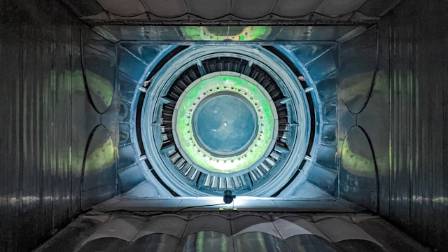
An alien probe is a theoretical unmanned spacecraft that could be sent by an extraterrestrial civilization to explore distant star systems, collect information, or potentially communicate with other intelligent life.
The idea sits between serious scientific speculation and science fiction, and different interpretations exist depending on context. Scientists have long studied how such probes might work and whether any could already be present in our solar system, while popular culture often uses the term in a completely different way.
The Scientific Idea of Alien Probes
The main motivation behind alien probe theory is distance. Space is vast, and communication using radio signals alone is extremely slow on interstellar scales. For civilizations separated by thousands of light-years, even a simple exchange could take longer than the lifespan of either society.
Because of this limitation, some scientists have suggested that advanced civilizations might prefer sending physical spacecraft instead of messages.
One early idea came from physicist Ronald Bracewell in 1960. He proposed that an advanced civilization could send autonomous probes to nearby star systems. These probes would be powered by long-lasting energy sources, equipped with artificial intelligence, and capable of monitoring their surroundings. If they detected intelligent life, they could attempt communication by receiving and retransmitting signals.
Rather than guessing where life might exist, such a probe would already be in place, acting as a permanent observer.
Self-Replicating Probes and Expansion Across the Galaxy
A more advanced concept is the idea of self-replicating spacecraft, often linked to mathematician John von Neumann. These probes would not only explore new systems but also use local materials—such as asteroids or moons—to build copies of themselves.
Each new probe would then travel to another system and repeat the process. Over time, this exponential growth could allow a single probe to spread across an entire galaxy.
Theoretical models suggest that full galactic coverage could occur within 1 million to 100 million years. While this is extremely long in human terms, it is relatively short compared to the age of the Milky Way, which is about 13 billion years old.
This leads to an important question in astronomy: if self-replicating probes are possible, why have we not seen evidence of them yet? This is related to a broader puzzle known as the Fermi Paradox.
Recent engineering studies have even explored partially self-replicating spacecraft, suggesting that future missions might manufacture a significant portion of their structure in space rather than launching everything from Earth.
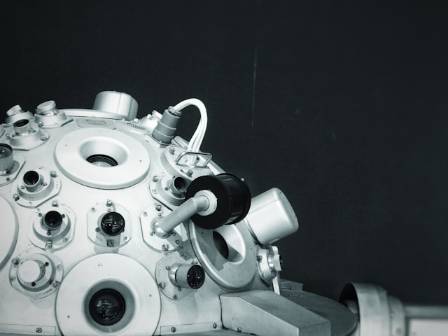
Could Alien Probes Already Be in Our Solar System?
Some researchers have suggested that alien probes might already exist in our own solar system but remain undetected.
These hypothetical devices are sometimes called “lurkers.” The idea is that a civilization interested in Earth could place a probe in a stable orbital region and quietly observe over long periods.
A key candidate location is the Lagrange points, where gravitational forces between large bodies (like Earth and the Moon) balance out. Objects placed here can remain relatively stable for long durations with minimal energy use.
For example, the Earth–Sun L4 and L5 regions contain dust clouds and small asteroids. A small artificial object placed among them could be extremely difficult to distinguish from natural space debris.
The ‘Oumuamua Mystery
In 2017, astronomers detected the first known interstellar object passing through our solar system: ‘Oumuamua (a Hawaiian word meaning “scout”).
This object showed unusual characteristics that sparked debate. Its brightness changed dramatically as it rotated, suggesting an unusually flat or elongated shape. Observations also failed to detect typical cometary gases or dust.
Most intriguingly, it accelerated away from the Sun in a way that could not be fully explained by gravity alone. Normally, comets show this behavior due to outgassing, but no visible tail or gas emissions were observed.
Some researchers proposed that radiation pressure from sunlight might explain the motion, which would require an extremely thin object. Others suggested natural but rare possibilities, such as unusual ice or fragmented material.
While the majority of scientists favor natural explanations, ‘Oumuamua highlighted how difficult it can be to distinguish between natural interstellar objects and potential artificial ones using current technology.
How Scientists Search for Alien Probes
Beyond looking in our solar system, scientists also search for indirect signs of large-scale extraterrestrial technology.
One method, often called Dysonian SETI, looks for unusual infrared radiation. Any advanced civilization using large amounts of energy would inevitably produce waste heat, which would appear as excess infrared emission from a star or galaxy.
Space surveys, including those conducted with NASA’s WISE telescope, have examined galaxies for this kind of anomaly. So far, no clear evidence of large artificial structures or energy-harvesting systems has been found, although this does not rule out smaller or more subtle technologies.
Humanity’s Own “Alien Probes”
Ironically, humans have already sent our own versions of alien probes into space.
Spacecraft such as Voyager 1 and Voyager 2, launched in 1977, have now entered interstellar space. They carry the Golden Record, a collection of sounds, images, and messages from Earth intended for any intelligent beings that might encounter them in the distant future.
Although they will not reach another star for tens of thousands of years, they already represent the same idea: a drifting messenger carrying information from one civilization to another across interstellar space.
The Pop Culture Meaning of “Alien Probe”
In popular culture, the term “alien probe” often refers to something very different—stories involving extraterrestrial encounters, abductions, and fictional examinations of humans by alien beings.
This interpretation originated in mid-20th-century UFO folklore and became widely used in films, television, and comedy. Over time, it developed into a recognizable sci-fi trope.
Despite sharing the same name, this version has no connection to the scientific concept. One refers to real theoretical spacecraft designed for exploration, while the other belongs entirely to entertainment and mythology.
Conclusion
The idea of alien probes blends serious scientific theory with imaginative speculation. In science, they represent a logical extension of interstellar exploration and communication strategies. In fiction, they have taken on entirely different meanings shaped by culture and storytelling.
Whether or not such probes exist, the concept continues to help scientists think about how advanced civilizations might explore the universe—and how we might one day be found ourselves.
संबंधित

उच्च स्तरीय प्रकाश व्यवस्था डिजाइन: पुरानी लैंपों को नया रूप देने के लिए छह चरणों वाली मार्गदर्शिका
घर को आलीशान लुक देने के लिए महंगे डिज़ाइनर लैंप की ज़रूरत नहीं होती। कई बड़े रिटेलर्स टेराकोटा और पत्थर की बनावट वाले शानदार लैंप बेचते हैं, जिनकी कीमत काफी ज़्यादा होती है, लेकिन थोड़ी सी रचनात्मकता और सस्ते सामान की मदद से आप भी ऐसा ही लुक पा सकते हैं। एक आकर्षक बेस चुनकर और कुछ खास DIY तकनीकें अपनाकर आप किसी भी पुराने सामान को घर की सजावट के एक बेहतरीन नमूने में बदल सकते हैं।

क्लासिक हस्तनिर्मित लेमोनेड: गर्मियों का बेहतरीन ताज़गी भरा पेय
एक बेहतरीन नींबू पानी बनाना संतुलन की कला है। यह देखने में तो सरल लगता है, लेकिन इसका रहस्य खट्टे नींबू और मीठे सिरप के सटीक अनुपात में छिपा है। यह भरोसेमंद तरीका यह सुनिश्चित करता है कि नींबू पानी न तो बहुत खट्टा हो और न ही बहुत पतला, जिससे एक ऐसा पेय तैयार होता है जिसका स्वाद एक जैसा और मधुर होता है, जो गर्म दोपहरों का सबसे अच्छा साथी साबित होता है।

Top 10 Benefits of Eating Grapefruit
Grapefruit, a vibrant citrus fruit known for its tangy-sweet flavor, offers a wealth of health benefits backed by nutrition science. From supporting blood sugar control to boosting immunity and aiding weight management, its unique combination of water, fiber, vitamins, and minerals makes it a valuable addition to a balanced diet. Below, we explore the top 10 benefits of eating grapefruit, along with its nutritional profile, potential risks, and practical tips for incorporating it into your meals.
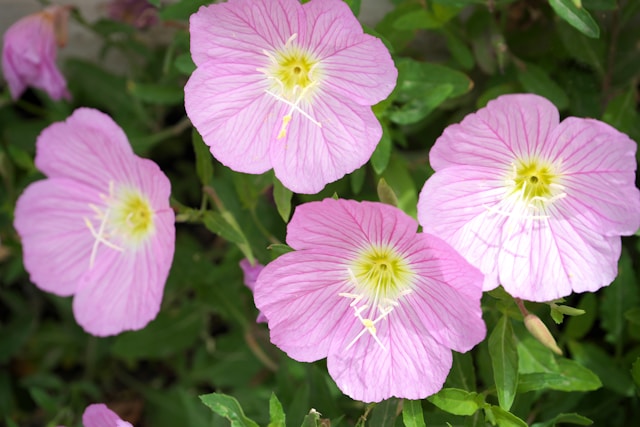
How to Grow and Care for Evening Primrose
Evening primrose (Oenothera biennis) is a visually striking plant recognized for its soft yet vibrant yellow blossoms. Although many gardeners grow it for its decorative charm, others consider it somewhat invasive because of how quickly it spreads. Native to North America, this plant establishes easily when sown in late autumn, develops quickly, and begins flowering each summer from its second year onward. Its lightly scented, four-petal flowers rise on branching, leafy stems, adding a gentle wildflower beauty to garden spaces.

पृथ्वी पर 10 सबसे हरी-भरी जगहें - जंगल में सैर से लेकर झरने में डुबकी तक
हरे-भरे गेटअवे हमें शांत और तरोताज़ा महसूस कराते हैं, इसका एक कारण है। रंग मनोविज्ञान के अनुसार, यह मिट्टी जैसा रंग तनाव को कम करने और ध्यान केंद्रित करने में मदद करता है - और यात्री दुनिया भर के हरे-भरे परिदृश्यों में इन बहुत-से-लाभों का लाभ उठा सकते हैं। क्रोएशिया में झीलों और झरनों के बीच शांति पाएँ। अफ्रीका के जंगली वर्षा वनों में शांति पाएँ। यहाँ पृथ्वी पर 10 सबसे हरी-भरी जगहें हैं, जो शांति और सुकून के साथ अविस्मरणीय रोमांच का अनुभव कराती हैं।

Fittonia Nerve Plant Care Guide
Fittonia, commonly called the Nerve Plant, is a compact houseplant admired for its attractive oval leaves covered with delicate vein patterns. The veins may appear in shades ranging from silvery white to vivid red, creating a striking contrast against the foliage. Most Fittonia varieties have rich green leaves, although some types display softer lime-green tones.