लेख
How Robotic Arms Work
Robotic arms are programmable machines designed to perform precise, repeatable movements using a combination of motors, sensors, and controllers. They play a critical role in industries ranging from automobile manufacturing to food packaging and medical procedures, delivering consistent accuracy in tasks that demand reliability.
Mason Lee
लेखक
नोट
संदर्भ के लिए संक्षिप्त कार्ड साथ रखे गए हैं।
श्रेणी
विश्लेषण
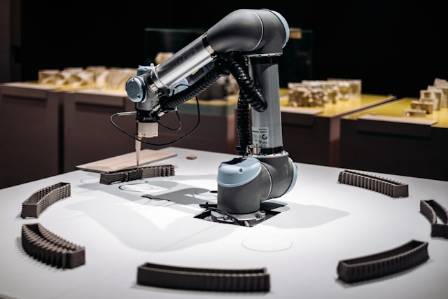
Robotic arms are programmable machines designed to perform precise, repeatable movements using a combination of motors, sensors, and controllers. They play a critical role in industries ranging from automobile manufacturing to food packaging and medical procedures, delivering consistent accuracy in tasks that demand reliability.
The first industrial robotic arm, Unimate, was patented in 1954 and installed at General Motors in 1961, launching the era of robotic automation. Today, robotic arms come in a wide spectrum—from heavy-duty machines assembling car bodies to compact desktop units used in laboratories or small workshops. Millions of robotic arms operate worldwide, performing welding, stacking, and surgical assistance with remarkable steadiness and precision.
How Robotic Arms Operate
At their core, robotic arms convert energy into controlled motion using actuators, joints, controllers, and sensors. Motors supply power, actuators act as the “muscles,” joints and links define the arm’s movement, and sensors provide feedback to maintain precision. The operation follows a sequence:
Energy Input: Most arms rely on electric motors for efficiency and control, though hydraulic or pneumatic systems are used for heavier applications.
Actuators: These components translate energy into mechanical force, moving joints and links.
Joints and Links: Joints resemble human elbows or wrists, while links serve as bones, providing flexibility to bend, rotate, or extend.
Controllers: Controllers direct the actuators and joints, ensuring the arm follows planned movements accurately.
Sensors: Sensors track position, torque, and speed, feeding data back to controllers for real-time adjustments.
The result is highly precise movement, enabling tasks like welding, assembly, or packaging with repeatability down to millimeters.
Overview of Robotic Arms
A robotic arm is essentially a programmable mechanical limb that mimics human motion. It consists of segments joined by flexible joints and is capable of executing complex tasks in manufacturing, healthcare, and research. Their adaptability allows the same basic design to weld cars, assemble microelectronics, or assist surgeons in delicate procedures.
Common types of robotic arms include:
SCARA Arms: Fast and accurate, ideal for pick-and-place and small assembly tasks.
Delta Arms: Lightweight, spider-like arms designed for high-speed packaging and sorting.
Cartesian Arms: Linear arms moving along X, Y, and Z axes, often used in CNC automation and 3D printing.
Collaborative Arms (Cobots): Safe-for-human arms intended to operate alongside people without heavy safety barriers.
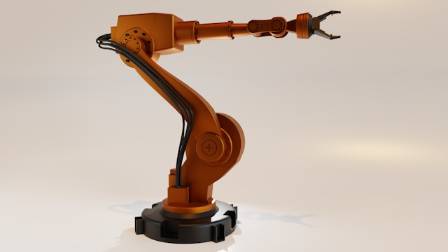
Articulated Arms: The most common type, featuring rotary joints for human-like flexibility, suited for welding, painting, and assembly.
Movement Principles
Robotic arms move through a combination of kinematics, path planning, and control systems, coordinating each joint and link.
Kinematics: Determines how joint angles affect the end effector. Forward kinematics predicts the end point from current positions, while inverse kinematics calculates joint movements required to reach a target.
Path Planning: Creates smooth, collision-free trajectories while balancing speed and safety, ensuring the arm avoids obstacles while maintaining efficiency.
Control Systems: Controllers direct actuators to move joints along the planned path. Sensors provide real-time feedback to correct any deviations, allowing precise, repeatable motion.
Programming and Control
Robotic arms are programmed using teach pendants, direct programming, and AI integration:
Teach Pendants: Operators manually guide the arm and save its movements as a program. This method is simple but can be time-consuming for long sequences.
Direct Programming: Engineers use software (Python, C++, or vendor-specific languages) to define motions, integrate sensors, and implement custom logic.
Artificial Intelligence: Machine learning and computer vision allow arms to recognize objects, adapt grip, and refine motion paths on the fly, improving efficiency in dynamic environments.
Examples of Industrial Robotic Arms
Standard Bots Core: A six-axis collaborative arm designed for small to medium-sized manufacturers. It can carry up to 18 kg, with ±0.025 mm repeatability, and integrates vision and collision detection for safe human collaboration. Priced around $37K, it makes advanced automation accessible to smaller workshops.
FANUC M-20iB/25: Supports 25 kg payloads with a reach of 1.85 m and ±0.02 mm repeatability. Used in assembly, packaging, and material handling, it offers a slim design for minimal interference and easy integration in crowded lines.
ABB IRB 2600: Handles 20 kg payloads with a reach of 1.65 m, excelling in welding, assembly, and machine tending in tight spaces. Its compact form and motion control software enhance precision.
KUKA KR QUANTEC: Designed for heavy-duty tasks, with payloads from 90 to 300 kg and a reach up to 3.9 m. It’s ideal for automotive body shops, palletizing, and aerospace applications, providing consistent accuracy with modular maintenance.
Key Takeaways
Robotic arms have evolved significantly since the Unimate. Modern systems combine motors, sensors, and controllers to deliver precise, repeatable motion across industries. From heavy-duty units like FANUC and ABB to accessible cobots like Standard Bots Core, robotic arms now serve a wide range of applications beyond factories, including healthcare, research, and home settings.
Benefits: Precision, speed, consistency, and adaptability.
Challenges: Cost, integration, safety, and learning curves for advanced programming.
As robotic arms continue to develop, balancing power, versatility, and accessibility will determine how deeply they integrate into everyday life and industry.
संबंधित

सिरेमिक आकृति मूर्तिकला: खोखली संरचनाओं के निर्माण के लिए एक व्यापक मार्गदर्शिका
भट्टी में पकाने के लिए सिरेमिक मानव आकृति बनाना एक विशेष प्रक्रिया है जिसके लिए सावधानीपूर्वक संरचनात्मक योजना की आवश्यकता होती है। ठोस मूर्तियों के विपरीत, सिरेमिक आकृतियाँ खोखली होनी चाहिए ताकि वे समान रूप से सूखें और पकाने की प्रक्रिया के दौरान टूट न जाएँ। यह मार्गदर्शिका लियोनार्डो दा विंची की कृति 'लेडी विद एन एरमाइन' से प्रेरित एक खोखली आकृति बनाने की प्रक्रिया को सरल शारीरिक चरणों में विभाजित करके समझाती है।

The 10 Best Supercars For 2026
The world of supercars is evolving rapidly, driven by electrification, hybrid systems, and extraordinary advances in automotive engineering. Looking toward 2026, these ten remarkable machines represent the cutting edge of speed, innovation, and design excellence.

लोंगन: दक्षिणपूर्व एशिया का अनोखा "ड्रैगन आई"
लोंगान एक छोटा, उष्णकटिबंधीय फल है जो अपने रसीलेपन और हल्की, मधुर मिठास के लिए प्रसिद्ध है। पतले, छाल जैसे छिलके और एक गहरे रंग के बीज वाले इस फल का एशियाई पाक कला और औषधीय परंपराओं में सदियों से गहरा महत्व रहा है। अपने अनूठे स्वाद के अलावा, लोंगान अपनी मजबूती के लिए भी जाना जाता है, जिसके पेड़ कई सदियों तक जीवित रह सकते हैं।

Use Design To Create a Powerful Painting
The structure behind a painting often matters more than the subject itself. Many beginners spend time searching for interesting scenes, believing that a compelling subject will automatically lead to a strong artwork. In reality, what truly elevates a painting is the underlying design—the arrangement and organization you bring to what you see. You are not simply recording the external world; you are shaping it through your own visual decisions. Without a clear design concept, it’s easy to become overwhelmed by details and lose direction.

कलात्मक मार्गदर्शिका: घटाव विधि से प्लास्टर के परिदृश्य बनाना
घटाव आधारित मूर्तिकला की कला में ठोस ब्लॉक के भीतर छिपी आकृति को उजागर करने के लिए जानबूझकर सामग्री को हटाया जाता है। भूदृश्य कला में इसका प्रयोग करने पर, यह तकनीक नाटकीय भौतिक गहराई का निर्माण करने में सहायक होती है, जो पृथ्वी की प्राकृतिक चोटियों, घाटियों और बनावटों की नकल करती है। इसका मुख्य उद्देश्य सकारात्मक और नकारात्मक स्थान को इस प्रकार व्यवस्थित करना है कि एक प्रवाहमय, त्रि-आयामी रचना का निर्माण हो जो हर कोण से देखने पर आकर्षक बनी रहे। सफल निष्पादन के लिए विचारशील नक्काशी और कलाकृति की स्थलाकृतिक विशेषताओं को उजागर करने के लिए रंगों के परिष्कृत अंतिम प्रयोग के बीच संतुलन आवश्यक है।

मंगल ग्रह: जंग लगे रंग की स्थलीय दुनिया का अन्वेषण
मंगल ग्रह का आकार पृथ्वी के लगभग आधे के बराबर है, जिसकी त्रिज्या लगभग 3,400 किलोमीटर और भूमध्य रेखा के चारों ओर परिधि 21,297 किलोमीटर है। वैज्ञानिकों का मानना है कि इसकी चट्टानी बाहरी परत के नीचे मंगल का कोर मुख्य रूप से लोहे से बना है, जिसमें निकेल और सल्फर भी मिश्रित हैं। यह कोर, जो ग्रह के कुल आकार का लगभग आधा है, पूरी तरह से तरल अवस्था में हो सकता है या इसमें एक ठोस केंद्र हो सकता है जो पिघले हुए पदार्थ से घिरा हो।