लेख
The Humble Beginnings of a Global Communication Revolution
Modern listeners often take for granted the seamless, crystal-clear audio that fills their environments daily. However, the technology that enables these invisible transmissions did not appear overnight, nor did it achieve immediate public embrace. The history of radio is a fascinating narrative of gradual scientific breakthroughs, cautious societal adoption, and continuous adaptation in an increasingly competitive media landscape. Before it became an essential instrument of mass entertainment and news distribution, wireless audio was merely an experimental concept rooted in the academic study of invisible electromagnetic fields.
Tyler Brooks
लेखक
नोट
संदर्भ के लिए संक्षिप्त कार्ड साथ रखे गए हैं।
श्रेणी
विश्लेषण
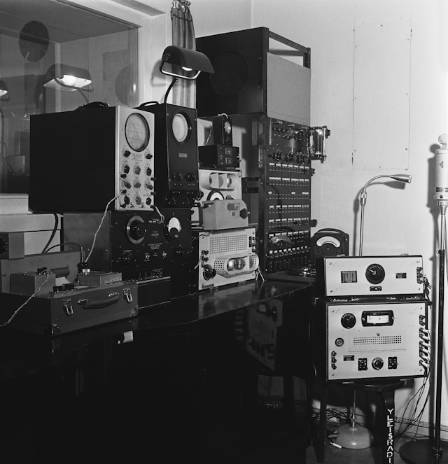
Modern listeners often take for granted the seamless, crystal-clear audio that fills their environments daily. However, the technology that enables these invisible transmissions did not appear overnight, nor did it achieve immediate public embrace. The history of radio is a fascinating narrative of gradual scientific breakthroughs, cautious societal adoption, and continuous adaptation in an increasingly competitive media landscape. Before it became an essential instrument of mass entertainment and news distribution, wireless audio was merely an experimental concept rooted in the academic study of invisible electromagnetic fields.
The Early Scientific Discoveries That Predicted Invisible Waves
The long journey toward functional wireless transmission began in the early nineteenth century with the fundamental exploration of electromagnetism. In 1820, a Danish scientist named Hans Christian Oersted made the groundbreaking observation that an electrical current flowing through a conductive wire naturally generates a distinct magnetic field in its immediate vicinity. This vital connection between electricity and magnetism was further solidified a decade later in 1830, when the English physicist Michael Faraday successfully demonstrated the principle of electromagnetic induction, proving that changing magnetic fields could be harnessed to generate electrical currents.
Building upon these foundational physical experiments, a Scottish professor of experimental physics named James Clerk Maxwell published a revolutionary theoretical paper in 1864. Maxwell mathematically deduced that electromagnetic currents could propagate through space and be detected at great distances, boldly proposing that these invisible waves traveled at the exact speed of light. Decades later, during the late 1880s, German physicist Heinrich Hertz conducted precise laboratory experiments that finally validated Maxwell's complex hypotheses, successfully generating these mysterious waves and confirming their incredible velocity.
Transforming Theoretical Physics into Practical Global Communication
Once the physical reality of electromagnetic waves was firmly established, inventors sought to transition this technology out of academic laboratories and into the real world. An ambitious Italian innovator named Guglielmo Marconi spearheaded this movement, beginning with modest, short-range transmission experiments conducted in his own family's courtyard. Marconi rapidly scaled up his apparatus, and by September of 1899, he captivated international attention by wirelessly transmitting the real-time results of naval yacht races from a vessel at sea directly to a receiving station positioned in New York.
Recognizing the vast commercial potential of this wireless telegraphy, Marconi established his own enterprise dedicated to commercial communication. By the conclusion of 1901, his engineering efforts culminated in the successful transmission of the very first transatlantic wireless signal, forever bridging the geographical divide between continents. At this early stage, however, the technology remained limited to sending coded messages composed entirely of rhythmic dots and dashes.
Sending the First Human Voices across the Airwaves
The true dawn of radio as a medium for speech and music occurred on Christmas Eve in 1906, thanks to the pioneering work of a Canadian physicist named Reginald Fessenden. Operating from an experimental station located at Brant Rock in Massachusetts, Fessenden achieved the unprecedented feat of broadcasting the human voice and live musical melodies across a vast distance. His historic audio signal traveled hundreds of miles down the coastline, reaching stunned operators as far away as Virginia and establishing the technical groundwork for future entertainment broadcasting.
To make these faint signals practical for the general public, significant improvements in amplification were required. In 1907, an American inventor named Lee De Forest introduced a game-changing device known as the Audion detector, a specialized vacuum tube that allowed radio frequencies to be magnified exponentially. This breakthrough meant that receiving sets no longer required highly specialized equipment to perceive faint long-distance transmissions, paving the way for mass-produced home receivers.
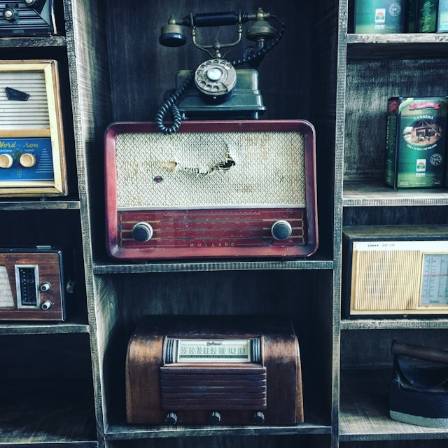
Technical Triumphs and the Hidden Struggles for Quality Audio
The rapid advancement of radio technology attracted a wave of brilliant engineers who sought to refine signal clarity and reception. In 1918, an American electronics pioneer named Edwin Armstrong invented the superheterodyne circuit, a revolutionary internal architecture that vastly improved how receivers processed incoming frequencies. Armstrong altered the landscape again in 1933 by figuring out how to successfully produce frequency modulation, or FM, broadcasts. This new method offered a vastly superior, static-free listening experience compared to the existing amplitude modulation, or AM, system.
Despite the clear superiority of FM technology, its widespread introduction faced a massive roadblock from corporate executives. The leadership at the Radio Corporation of America, spearheaded by a prominent media mogul named David Sarnoff, chose to aggressively prioritize the corporate development of television systems. As a result of this strategic corporate decision, the public availability of high-fidelity FM radio was intentionally suppressed for more than a decade while the company secured its foothold in the emerging visual medium.
The Golden Age of Home Entertainment and Modern Digital Frontiers
Despite institutional delays, the public appetite for wireless audio programming grew at an exponential rate. Experimental music and cultural programs began airing around 1910, including early operatic broadcasts organized by De Forest in New York. By 1920, institutionalized commercial broadcasting officially arrived with the establishment of pioneering licensed stations in Pennsylvania and Michigan, which provided communities with scheduled daily news and entertainment. Corporate leaders quickly recognized the immense power of this new network model, using it to build vast media conglomerates that dominated the cultural landscape.
Between the late 1920s and the dawn of the 1950s, radio entered its celebrated golden era, during which millions of families gathered around massive living room receivers to enjoy serialized dramas, live comedies, musical variety hours, and competitive quiz shows. Although the widespread adoption of home television sets in the 1950s eventually brought an end to this specific golden age, radio adapted by shifting toward localized music formats and pioneering stereophonic sound reproduction in the 1960s. Today, the medium continues to evolve through innovations like Digital Audio Broadcasting, which delivers pristine sound quality alongside visual text displays, ensuring that this century-old technology remains a deeply influential force in modern daily life.

संबंधित
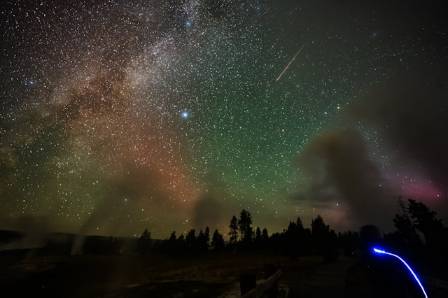
8 of the World’s Premier Stargazing Destinations
Our stargazing expert reveals her top picks for experiencing the night sky in its full brilliance.

Summer Coolers: 6 Refreshing Fruit Juice Picks to Combat the Heat
When summer’s warmth intensifies, a crisp, fruit-filled juice is the ultimate way to stay cool and energized. From zesty citrus blends to tropical escapes, berry-rich sips to hydrating melon creations, and even exotic fruit mixes with herbal twists—these drinks offer more than just refreshment. They’re packed with vitamins, antioxidants, and natural goodness to keep you feeling your best all season. Adding a sprig of mint or basil can elevate their flavor, making them both delicious and beneficial. Let’s explore these options to find your new summer favorite.

11 Fascinating Facts About Raccoons
Raccoons are smart, adaptable creatures found all over North America. Known for their masked faces and nimble paws, they thrive in both forests and cities. Here are 11 surprising facts about these clever animals.

अद्वितीय तारा फल के बारे में आवश्यक जानकारी
स्टार फ्रूट, जिसे कैरम्बोला भी कहते हैं, एक देखने में आकर्षक उष्णकटिबंधीय फल है जिसकी पहचान इसकी अनोखी धारियों से होती है। जब इसे आड़ा काटा जाता है, तो ये धारियाँ पाँच कोनों वाले तारे का एकदम सही आकार बनाती हैं, इसी वजह से इस फल का यह लोकप्रिय नाम पड़ा है। अपनी दिलचस्प बनावट के अलावा, यह फल भरपूर पैदावार देता है; एक परिपक्व पेड़ सालाना 200 से 400 पाउंड तक फल दे सकता है। चाहे इसे ताज़ा खाया जाए या सजावटी रूप में इस्तेमाल किया जाए, स्टार फ्रूट अपने अनोखेपन और महत्वपूर्ण जैविक महत्व का अनूठा संगम प्रस्तुत करता है।
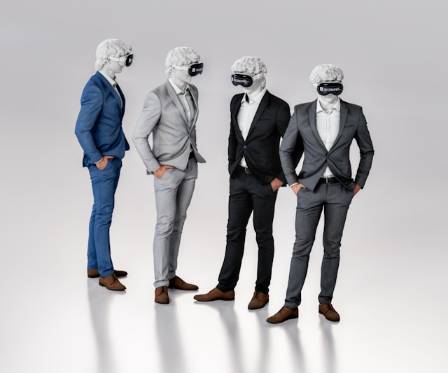
Οι Καλύτερες Ανδρικές Στολάδες Ταξιδιού του 2025: Εξοικουμενιστική Αξιολόγηση των Bluffworks, Ministry of Supply, xSuit και άλλων
Για τον σύγχρονο άνδρα σε movimento – είτε ταξιδεύει με τζετ για μια επαγγελματική συνάντηση μεταξύ πόλεων, έναν γάμο σε προορισμό ή μια περιπέτεια τουρισμού – μια υψηλής ποιότητας στολάδα ταξιδιού είναι περισσότερο από απλά ρούχα: είναι ένας ευέλικτος σύντροφος που συνδυάζει μόδα, άνεση και πρακτικότητα. Δεν περιορίζεται πλέον στις душές, μόνο για καθαρισμό σε ξηρό επίσημες одежδές, οι σημερινές κορυφαίες στολάδες ταξιδιού κατασκευάζονται με κορυφαίες υφές για να είναι αντιστέκονται στις ρυτίδες, πλύνονται σε μηχανή, είναι αφράστερες και αναπνοήσιμες – λύνοντας την αιώνια δίλημμα του να φαίνονται κομψός μετά από ώρες σε μια στενή θέση αεροπλάνου ή μια γεμάτη βαλίτσα. Σε αυτόν τον βαθύ οδηγό, έχουμε δοκιμάσει προσωπικά πέντε από τις πιο δημοφιλείς στολάδες ταξιδιού στην αγορά – από την Ministry of Supply και τις Bluffworks έως την xSuit, Twillory και Buck Mason – αξιολογώντας την ποιότητα της υφής, την εφαρμογή, την ανθεκτικότητα και την αξία τους. Είτε είστε ένας συχνός ταξιδιώτης, ένας απασχολημένος επαγγελματίας ή κάποιος που θέλει μια χαμηλής συντήρησης στολάδα για περιστασιακές поездές, αυτή η αξιολόγηση θα σας βοηθήσει να βρείτε την τέλεια επιλογή για τις ανάγκες σας.

बाह्य अंतरिक्ष के चमत्कारों के लिए एक गहन मार्गदर्शिका
ब्रह्मांड वैज्ञानिक, ऐतिहासिक और सांस्कृतिक घटनाओं का एक विशाल और आकर्षक संग्रह प्रस्तुत करता है। दूर की आकाशगंगाओं की घूमती हुई गैसों से लेकर हमारे पड़ोसी ग्रहों की चट्टानी सतहों तक, ब्रह्मांड ऐसी वस्तुओं से भरा है जो भौतिकी और समय के बारे में हमारी समझ को चुनौती देती हैं। नवीनतम खगोलीय खोजों का अध्ययन करके और हमारे सौर मंडल की संरचना की जांच करके, हम अपने ग्रह को घेरने वाले खगोलीय वातावरण के बारे में अधिक स्पष्ट दृष्टिकोण प्राप्त करते हैं।